Read aloud by your device's voice. It sounds different on each device.
1810
A small chapel built around 1810 for the Christ of Esquipulas
Bernardo Abeyta built a small chapel to the Christ of Esquipulas on the site around 1810. In 1813 he asked the parish priest to seek permission for a bigger church, noting that cures were reported and many pilgrims were arriving. The diocese of Durango wrote back with permission in 1814, and by 1816 the chapel was replaced by the shrine.
The building
Adobe walls more than 3 feet thick, a tower on each side
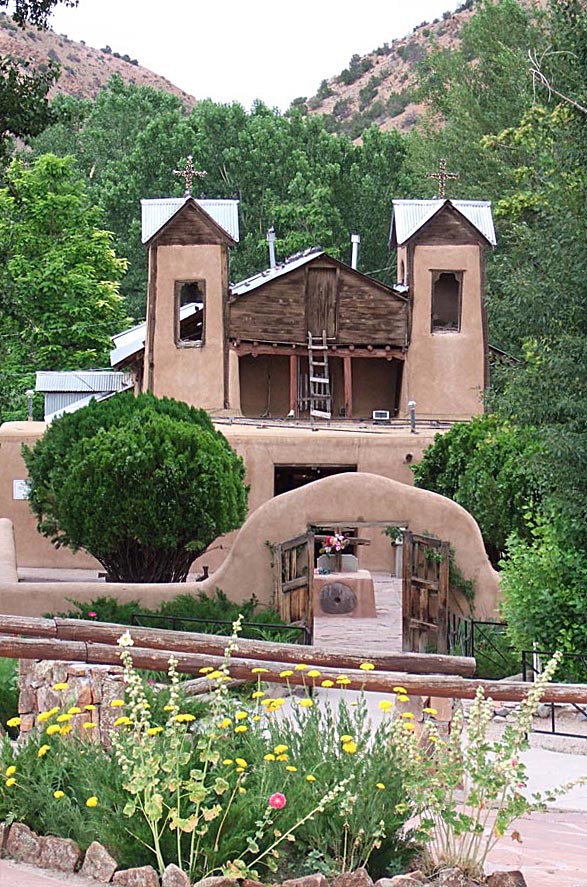
The church is built of adobe with a bell tower on each side and is entered through a walled courtyard. It is 60 feet long and 24 feet wide, with walls more than 3 feet thick. The nave holds a 6 foot crucifix of the Christ of Esquipulas, and the folk-art decorations include five reredoses.
Holy dirt
A small room with a pit of holy dirt, replaced by the ton
A small room called el pocito, the little well, holds a round pit, the source of the holy dirt that is believed to have healing powers. The Church replaces the dirt from the nearby hillsides, up to 25 or 30 tons a year. It takes no position on whether miracles have occurred, and skeptics have said the soil is ordinary.
Holy Week
Some 300,000 pilgrims come each year, many of them on foot
Each year some 300,000 people make pilgrimages to the Santuario during Holy Week, especially on Holy Thursday and Good Friday. Walking is traditional, and some pilgrims walk from as far away as Albuquerque, about 90 miles. The pilgrimage began in the 19th century and was revived by survivors of the Bataan Death March after World War II.
300,000pilgrims each year, most in Holy Week
Day 3, morning
Next is San José de Gracia Church, Las Trampas.
More stories from this trip idea
The words are a retelling of the Wikipedia article El Santuario de Chimayo, and are shared under CC BY-SA 4.0. They are checked against those articles, and a fact that is not in them is left out.