Read aloud by your device's voice. It sounds different on each device.
The museum
It is the largest and most visited museum in Mexico
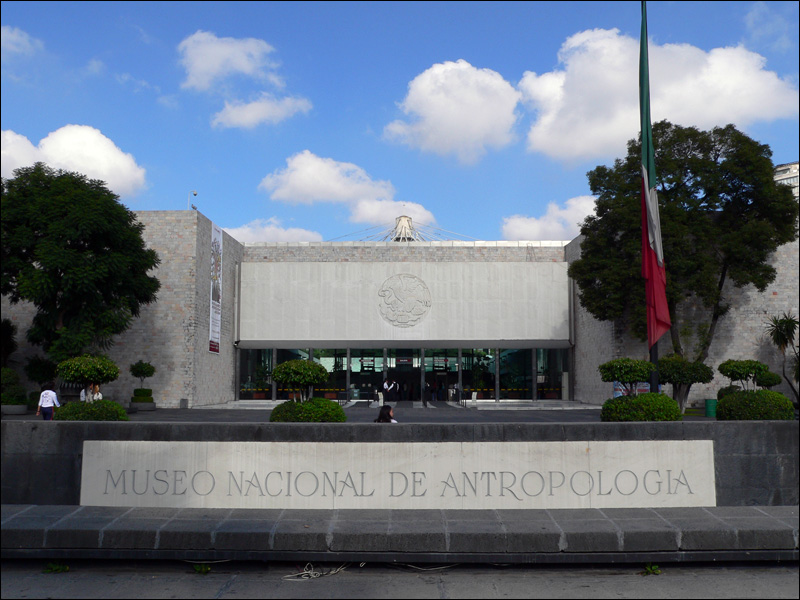
The museum holds archaeological and anthropological artifacts from Mexico's pre-Columbian heritage, such as the Stone of the Sun and the Aztec Xochipilli statue. It stands in Chapultepec Park and received 3,700,000 visitors in 2024.
3,700,000visitors in 2024
Moves
The collection moved several times before it reached Chapultepec Park
The core was the Boturini collection, which included the Coatlicue sculpture and the Sun Stone. In 1865 Emperor Maximilian moved the museum to Calle de Moneda 13. In December 1940 the historical collections went to Chapultepec Castle.
Built in 1964
The present building went up in nineteen months and opened in 1964
Construction began in February 1963 under Pedro Ramírez Vázquez, with Rafael Mijares Alcérreca and Jorge Campuzano. It took nineteen months, and President Adolfo López Mateos inaugurated it on September 17, 1964.
19 monthsthe length of the construction
“The Mexican people lift this monument in honor of the admirable cultures that flourished during the Pre-Columbian period in regions that are now territory of the Republic.”
President Adolfo López Mateos, 1964
The umbrella
A single column holds up a concrete umbrella over the courtyard
Exhibition halls surround a courtyard with a huge pond and a vast square concrete umbrella supported by a single slender pillar. The roof is reinforced concrete covered in aluminum, and the column carries carvings by Chávez Morado.
23rooms for exhibits
A critic
Octavio Paz said the Mexica hall turned the museum into a temple
Assessments of the museum vary. One calls it a national treasure and a symbol of identity. Octavio Paz criticized making the Mexica hall central, saying the glorification of Mexico-Tenochtitlan transforms the museum into a temple.
Day 2, morning
Next is Chapultepec Park.
More stories from this trip idea
The words are a retelling of the Wikipedia article National Museum of Anthropology (Mexico), and are shared under CC BY-SA 4.0. They are checked against those articles, and a fact that is not in them is left out.