Read aloud by your device's voice. It sounds different on each device.
The city
Chichen Itza was one of the largest Maya cities
Chichen Itza was a large pre-Columbian city built by the Maya people of the Terminal Classic period. The city may have had the most diverse population in the Maya world, which could explain the variety of architectural styles at the site.
The cenotes
Four visible cenotes made the site attractive, and another lies hidden
The northern Yucatán Peninsula is karst, and the interior rivers run underground. Four visible cenotes could have provided plentiful water all year. In 2015 scientists determined that a hidden cenote lies under the Temple of Kukulkan.
fourvisible natural sink holes, called cenotes, at the site
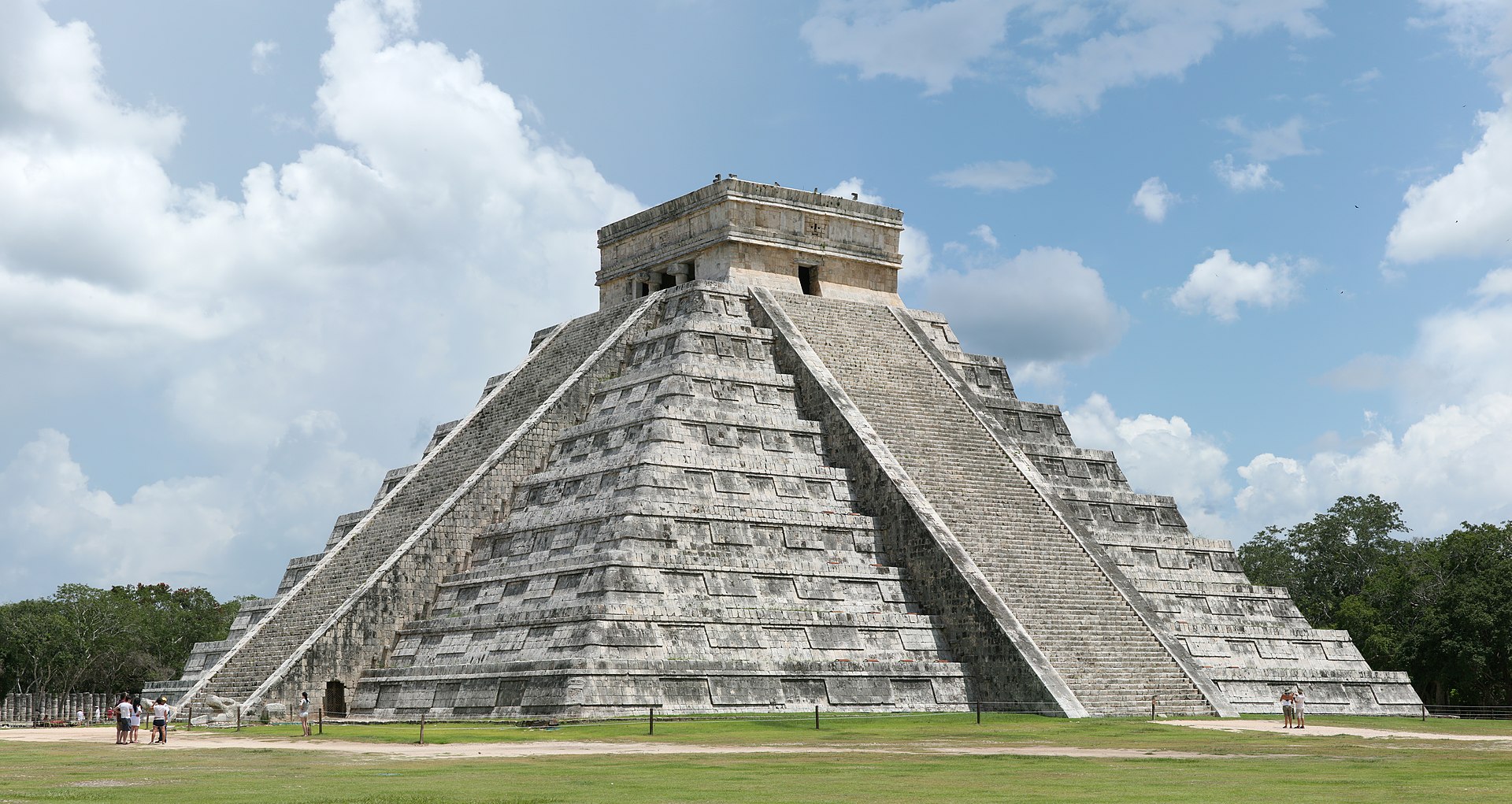
El Castillo
A serpent of shadows appears on El Castillo around the equinoxes
The first Spaniards to see the temple called it El Castillo, the castle. Around the spring and autumn equinoxes the northwest corner casts triangular shadows that evoke a serpent wriggling down the staircase. That it was made to record the equinoxes is highly unlikely, since the effect lasts several weeks.
Ball court
The Great Ball Court is the largest and best preserved in ancient Mesoamerica
Archeologists have identified thirteen ballcourts at Chichen Itza, but the Great Ball Court is the most impressive. It measures 168 by 70 meters. Rings carved with intertwined feathered serpents are set high in the center of its walls.
168 by 70 metersthe size of the Great Ball Court
Thompson
Edward Thompson bought the hacienda and dredged the Sacred Cenote
In 1894 the United States Consul to Yucatán, Edward Herbert Thompson, bought the Hacienda Chichén and its ruins. He dredged the Cenote Sagrado from 1904 to 1910. In 1926 he was charged with theft; in 1944 the Mexican Supreme Court ruled he had broken no laws.
Day 4, afternoon
It comes after Convent of San Antonio de Padua.
More stories from this trip idea
The words are a retelling of the Wikipedia article Chichen Itza, and are shared under CC BY-SA 4.0. They are checked against those articles, and a fact that is not in them is left out.