Read aloud by your device's voice. It sounds different on each device.
The first
Constantine built the first church over a shrine
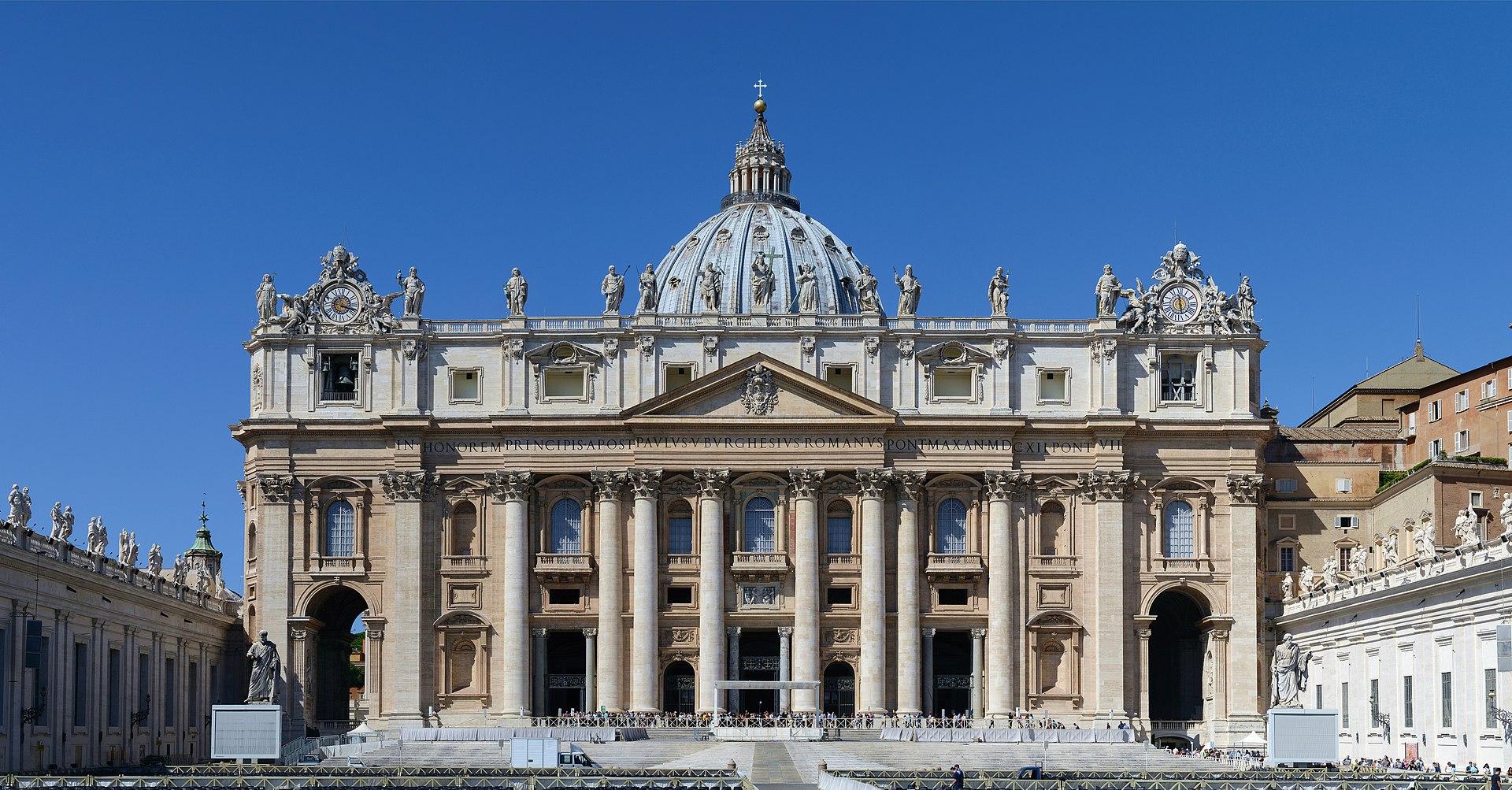
The first basilica was begun by the Emperor Constantine between 319 and 333 AD, over a small shrine believed to mark the burial place of St. Peter. It was over 103.6 metres long and held the burials and memorials of most of the popes from St. Peter to the 15th century.
The plan
Julius II chose to demolish it, and it took 120 years
In 1505 Pope Julius II decided to demolish the ancient basilica and build a monumental new one. Construction began on 18 April 1506 and was completed on 18 November 1626, after a succession of popes and architects over about 120 years.
120 yearsof popes and architects before the present basilica was complete
The stone
A pope had ordered the Colosseum taken down for it
Pope Nicholas V, who ruled from 1447 to 1455, had ordered the demolition of the Colosseum, and by the end of his reign 2,522 cartloads of stone had been transported for use in the new building. The work was frustrated by political problems and little else was achieved.
The dome
Michelangelo took over in his seventies
On 1 January 1547 Michelangelo, then in his seventies, took charge of the building programme. The job was forced upon him by Pope Paul III. He is regarded as the principal designer of a large part of the building as it stands, and the top of the dome stands at 448.1 feet.
“I undertake this only for the love of God and in honour of the Apostle”
Michelangelo, on taking charge of the building, 1547
The size
The largest church in the world by interior measure
St. Peter's is the largest church in the world by interior measure, with an interior area of 15,160 square metres. The Pope presides at liturgies in the basilica or the square that draw audiences from 15,000 to over 80,000 people.
15,160square metres of interior area
Day 2, midday
It comes after Vatican Museums. Then Castel Sant'Angelo.
More stories from this trip idea
The words are a retelling of the Wikipedia article St. Peter's Basilica, and are shared under CC BY-SA 4.0. They are checked against those articles, and a fact that is not in them is left out.