Read aloud by your device's voice. It sounds different on each device.
A hospital
The museum building was a hospital until 1969
The building is on the site of the first General Hospital of Madrid. King Ferdinand VI decided to build a new hospital in the eighteenth century, designed by José de Hermosilla and his successor Francisco Sabatini. Only one-third of Sabatini's project was completed, and it closed as a hospital in 1969.
A museum
Three glass towers were added in 1989
Extensive renovations began in 1980. The building served as an art centre from 1986 and became the national museum in 1988. In 1989 Ian Ritchie radically changed its look with the addition of three glass circulation towers. It was officially inaugurated on September 10, 1992.
Guernica
Picasso's Guernica of 1937 is the best known work here
The museum is mainly dedicated to Spanish art, with collections of Spain's two greatest 20th-century masters, Pablo Picasso and Salvador Dalí. The most famous masterpiece in the museum is Picasso's 1937 painting Guernica.
Expansion
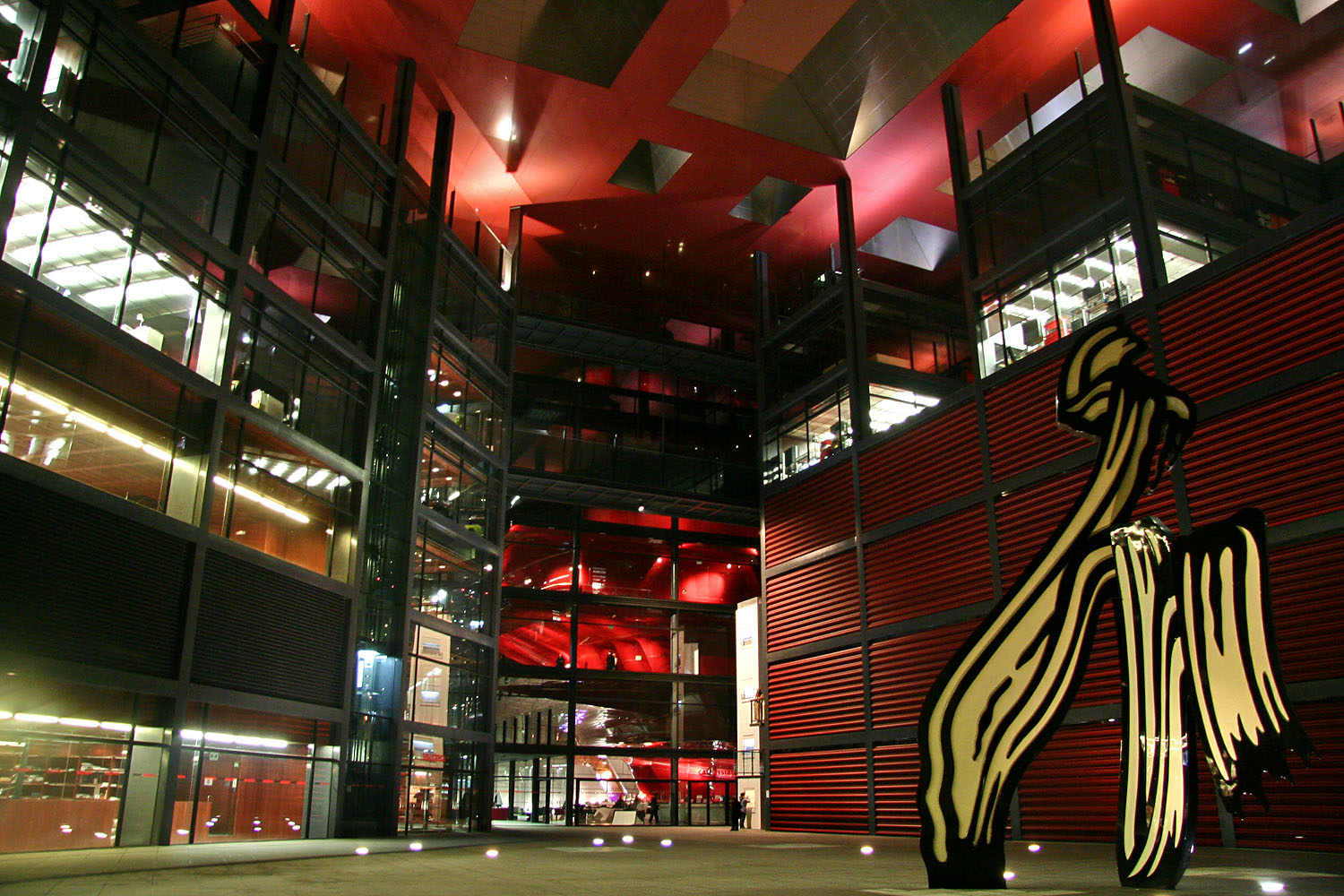
In 2005 an extension by Jean Nouvel added a 500-seat auditorium
An expansion of 8000 square metres, designed by the French architect Jean Nouvel, opened in October 2005. It includes spaces for temporary exhibitions, an auditorium of 500 seats and a 200-seat auditorium, a bookshop and restaurants.
Visitors
In 2025 the main site received 1,601,732 visitors
In 2025 the museum's main site received 1,601,732 visitors, up 4.2 percent on 2024. It also hosts a free-access library of over 100,000 books, with over 3,500 sound recordings and almost 1,000 videos.
Day 3, morning
Next is La Latina.
More stories from this trip idea
The words are a retelling of the Wikipedia article Museo Nacional Centro de Arte Reina Sofía, and are shared under CC BY-SA 4.0. They are checked against those articles, and a fact that is not in them is left out.