Read aloud by your device's voice. It sounds different on each device.
The founder
Constable Nuno Álvares Pereira founded the convent in 1389
The monastery was founded in 1389 by the Constable D. Nuno Álvares Pereira, supreme military commander of the King. He later donated his wealth to the convent and entered it.
The church
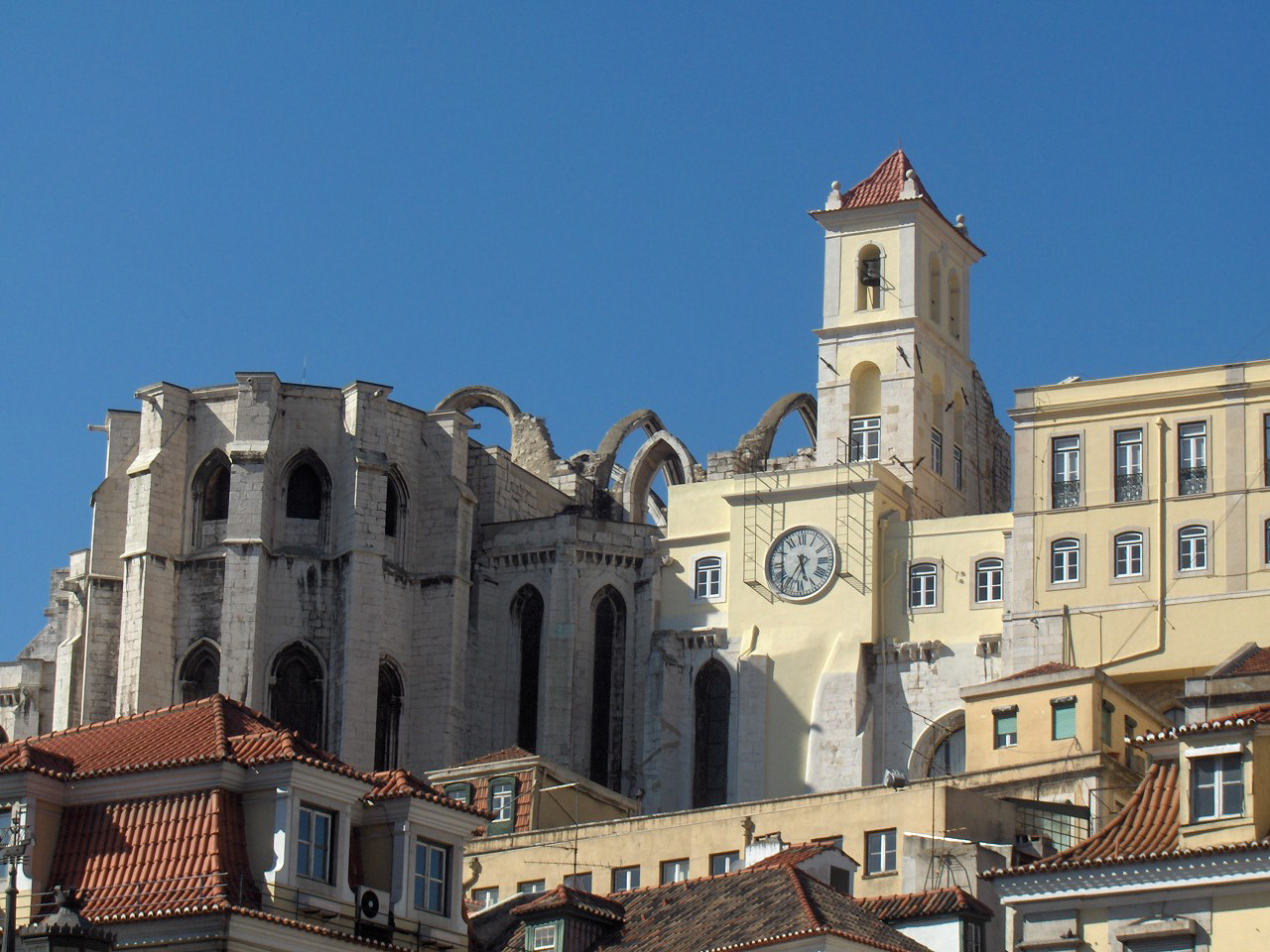
The church was built between 1389 and 1423 in plain Gothic style
The convent and church were built between 1389 and 1423 in the plain Gothic style typical of the mendicant orders. Five flying buttresses were added in 1399 after the south wall collapsed during the construction work.
1755
The 1755 earthquake destroyed a library of about 5000 volumes
In 1755 an earthquake caused significant damage and completely destroyed the library, which housed approximately 5000 volumes. The 126 clerics at the time had to abandon the building. The stone roof over the nave was never rebuilt.
126clerics who had to leave the convent
A museum
A ruin became a barracks, a sawmill shop and then a museum
After 1755 the site held police quarters, and the church was rented out as a sawmilling shop in 1835. In 1864 the buildings were donated to the Association of Portuguese Archaeologists, which turned the ruin into a museum.
Revolution
Rebels encircled the convent during the Carnation Revolution
During the events of the Carnation Revolution the convent was encircled by military rebels. Marcelo Caetano and forces loyal to his regime were holed up in the buildings and eventually surrendered to António de Spínola.
Day 2, afternoon
It comes after Chiado. Then Miradouro de São Pedro de Alcântara.
More stories from this trip idea
The words are a retelling of the Wikipedia article Carmo Convent, and are shared under CC BY-SA 4.0. They are checked against those articles, and a fact that is not in them is left out.