Read aloud by your device's voice. It sounds different on each device.
Why it was built
After the siege of 1537 the Venetians cleared 2,000 homes for new walls
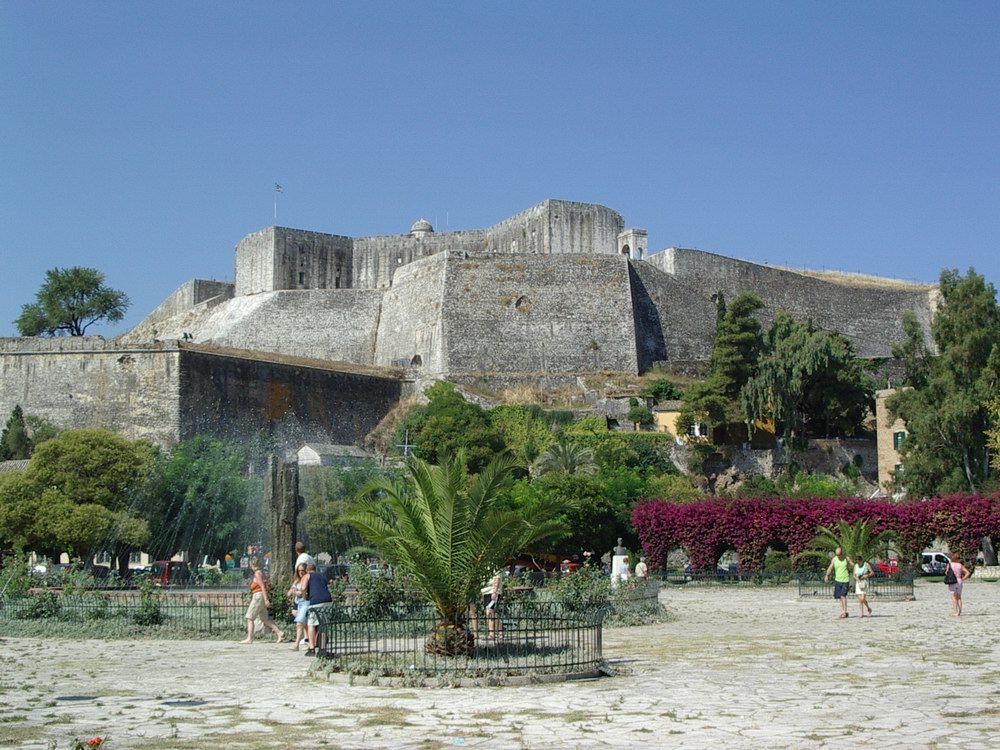
After the first great Ottoman siege in 1537 the Corfu city council complained to Venice about the lack of fortifications outside the medieval citadel. The Venetians razed 2,000 homes in the suburb of San Rocco and built new walls in their place.
The architect
Ferrante Vitelli was the first architect, but the dates are uncertain
The New Fortress stands on the hill of St. Mark, and its original architect was the military engineer Ferrante Vitelli. The exact dating is not established. Accounts vary between 1576 or 1577 to 1588 and 1572 to 1645.
Inside
Inside the bastion is a maze of chambers, galleries and ramps
The compound has two levels. The lower holds a three-storey building called Punta Perpetua and a pentagonal bastion. Inside the bastion are arched chambers, galleries, ventilation shafts, stairs and ramps. The twin bastions are named Skarponas and Epta Anemoi, Seven Winds.
A Latin text
An inscription of 1728 shows the Lion of Saint Mark
At least two inscribed monuments survive on the rampart walls. The best preserved is from 1728 and shows the Lion of Saint Mark, the symbol of Venice, and the arms of Diedo, with a Latin inscription naming the three men who ordered, planned and finished the wall.
The British
The buildings inside date from British rule, and the sea walls went in 1864
The buildings inside were built by the British during their rule of the island, which began in 1815. The fortifications included 700 pieces of artillery. The sea defences were destroyed when Corfu was united with Greece in 1864.
700pieces of artillery in the fortifications
Day 1, evening
It comes after Church of Saint Spyridon.
More stories from this trip idea
The words are a retelling of the Wikipedia article New Fortress, and are shared under CC BY-SA 4.0. They are checked against those articles, and a fact that is not in them is left out.